After showing you how to paint trim, I wanted to show you something else I tried on the same hallway project… how to paint after removing chair rail.
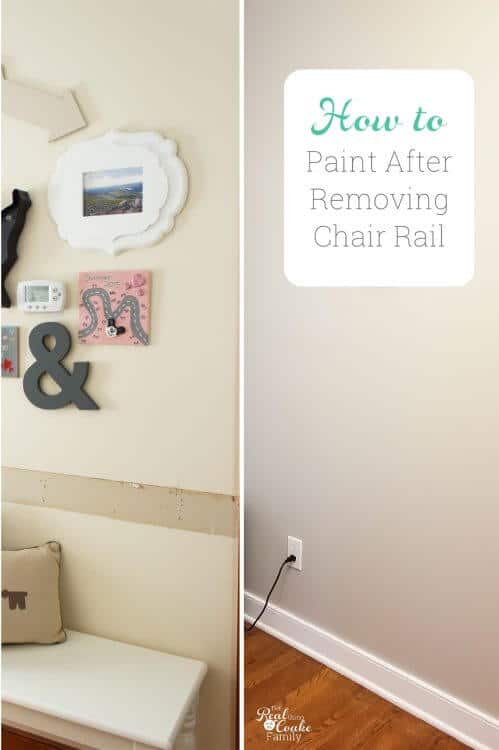
If you have chair rail in your house and want to remove it, it is a relatively simple process, but then what? Usually, you have some damage to the walls as well as visible lines showing that the chair rail was there.
I know. I’ve done this in 2 rooms already. Yet, I really dislike the chair rail for my style, and I want it gone.
To compound the issue for me, in the area in which we live, they leave the walls smooth. No texture. That means any little blemish is going to show. I mean even filling in a nail hole, you can see where the patch and paint was. I really dislike it. A. Lot.
I was contemplating hiring the same painter to come to paint my 2 story stairwell because I’m not sure how to do it. While she was giving me a bid, she was telling me that painting after removing chair rail is all about texture. We got interrupted so I didn’t get the full details, but it was enough for me to ponder that thought. I decided to give a new technique a try after removing the chair rail, and I’m happy with the result, so I wanted to share with you and help more of you achieve better results painting after removing chair rail.
How to Paint After Removing Chair Rail
Supplies:
- Patch and Paint – This is the one I’ve used on my last two projects. It is a little bit more expensive, but I like the results. There is less shrinking and therefore less need for 2nd layers
- Putty knife – you will want one that is 4 -6″ wide
- Sandpaper
- Sanding Block – I recently discovered this one and really like that I can cut and add any sandpaper to it. The handle makes it easier to do a good and quick job.
- Primer
- Frog Tape
- 1/2″ Nap Roller (or greater if your walls are not smooth)
- 1/4″ Nap Roller (or greater if your walls are not smooth)
- Paint
- Drop Cloths
First up, if you need to remove your chair rail, you can find the directions on how to do that in that post. The first post goes through how to take it down and the second post goes over what to do after that. You can read the second post if you want to understand the agony of the first time we tried this process. It was not fun. At any rate, some of that info about how to patch and fill, etc. is helpful, but don’t listen to the painting advice, because I’ve got better advice for you today.
This post is only going to tackle the steps after the chair rail is removed.
Step 1: Fill in holes
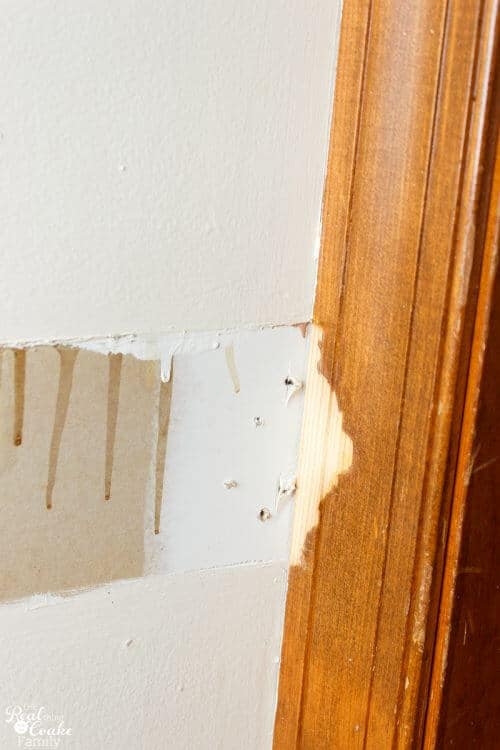
You are going to have nail holes when you remove your chair rail. 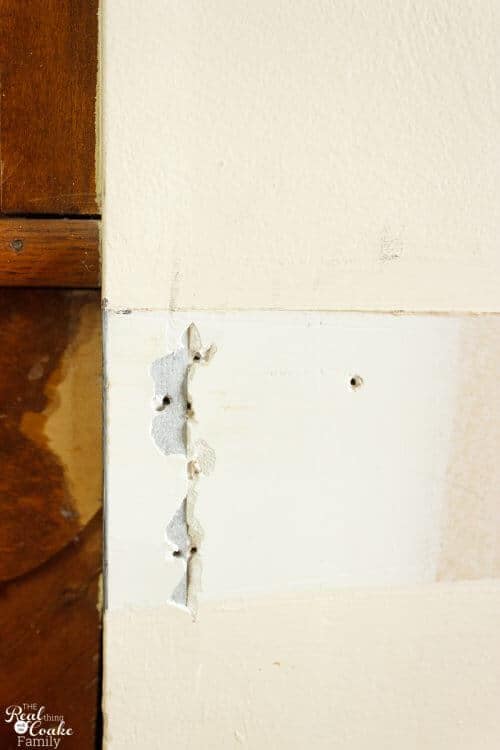
You may also have some larger areas where things came down with the chair rail. Expect these.
Use your patch and paint to fill these in.
In the past, I have tried just filling in holes and doing a minimum to filling the whole area in where the chair rail had been and sanding it perfectly smooth. Neither yielded the results I wanted.
This time, I went for a combo. I filled in holes and loosely filled in the space where the chair rail had been. I wasn’t trying to go for perfect this time. I was just trying to fill in the holes and obvious places where I knew I would be able to tell there had been chair rail. I also knew I would likely still be able to see some of the lines where the chair rail had been and so just didn’t spend hours trying to perfect things. I say I did the lazy quick but sort of decent job. ???
Step 2: Sand
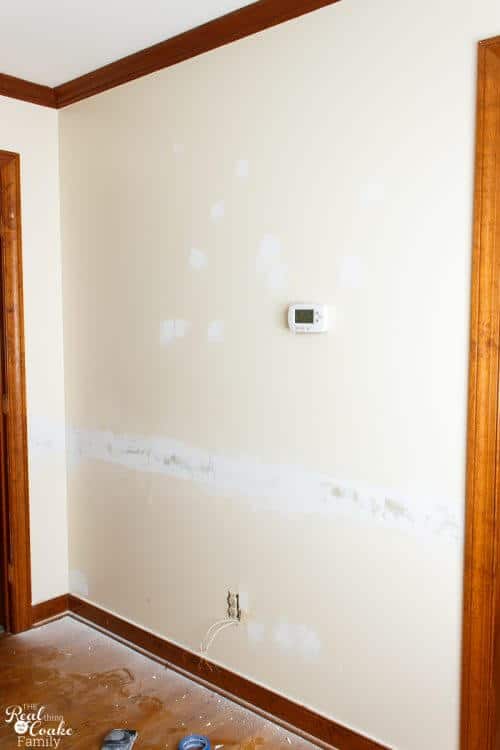
You are going to need to sand because the patch and paint needs to be smoothed down.
If your walls are smooth like mine, you will want to use a 120 grit sandpaper.
You can use higher if you want, but as I’ve said already I was trying to test out something new and didn’t want things overly smooth and perfect this time, so I went with the 120 grit sandpaper.
Step 3: Wipe down your walls
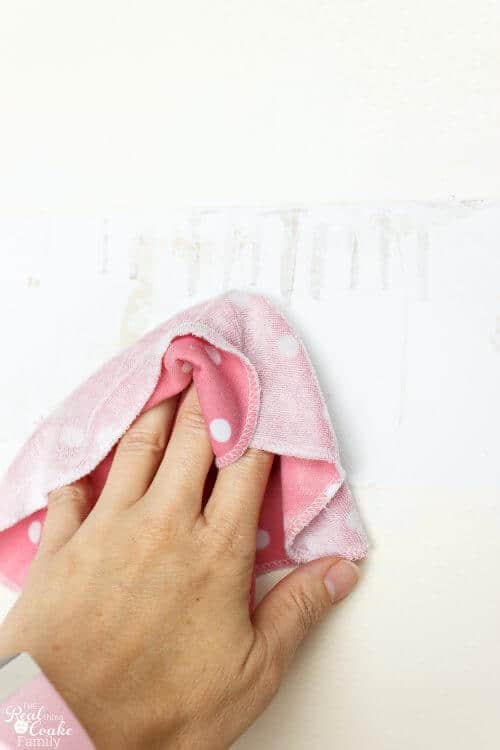
Use a damp cloth to wipe down your walls. You want to remove all of the dust and debris from your walls before you paint.
Step 4: Tape
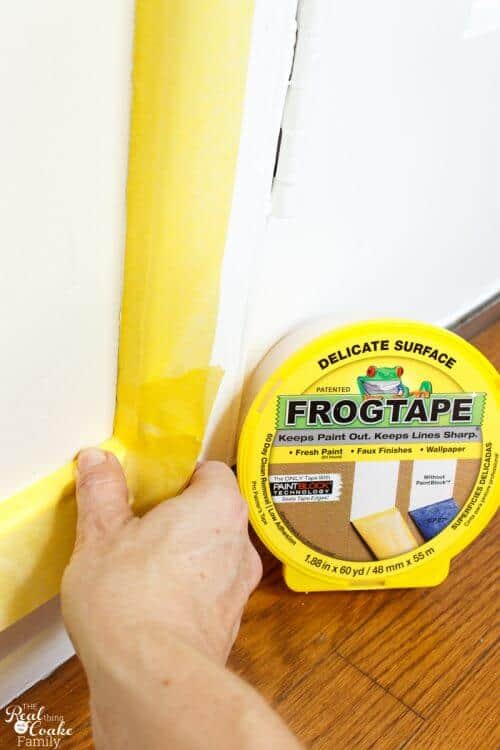
I highly recommend taping your walls. It allows you to get perfect lines without the frustration of trying to cut in and getting paint where you don’t want it. Frog tape is my favorite tape because I get best results from it with the least amount of bleeding of paint under the tape and the easiest time removing it.
In my case, I had just painted the trim, so I used the Delicate Surface Frog tape, so I didn’t have to wait for the paint to cure before taping and painting the walls.
Step 5: Prime
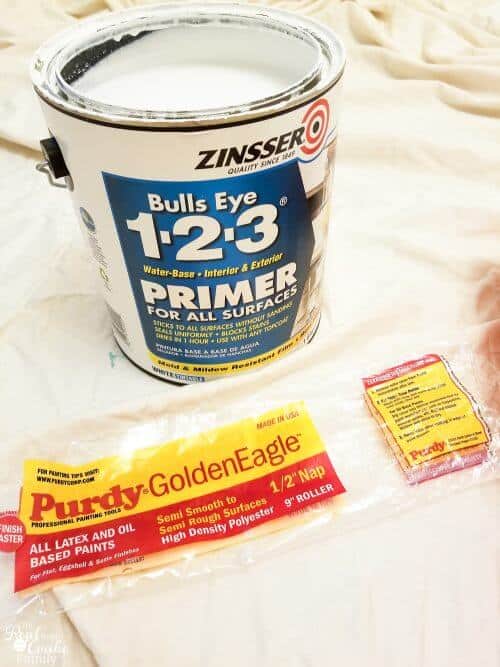
Now here is where the magic happens of what I tried on the walls this time.
Use a roller that is a higher nap than your wall needs.
For me, I have smooth walls, so a 1/2″ nap is going to give me extra texture as I paint.
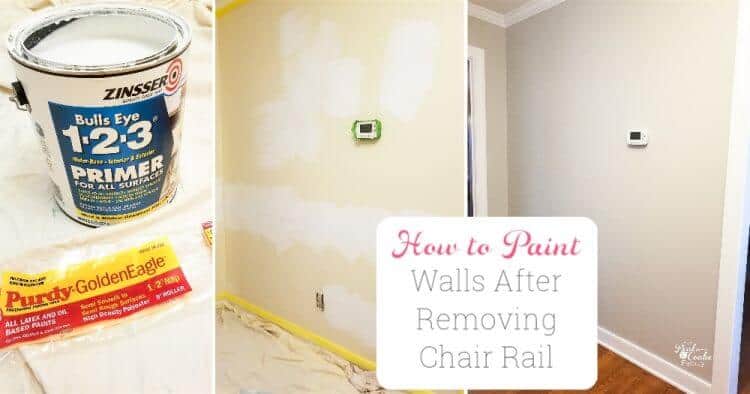
Prime anywhere that the chair rail was as well as anywhere you used patch and paint to fill nail holes, etc. Use your higher nap roller.
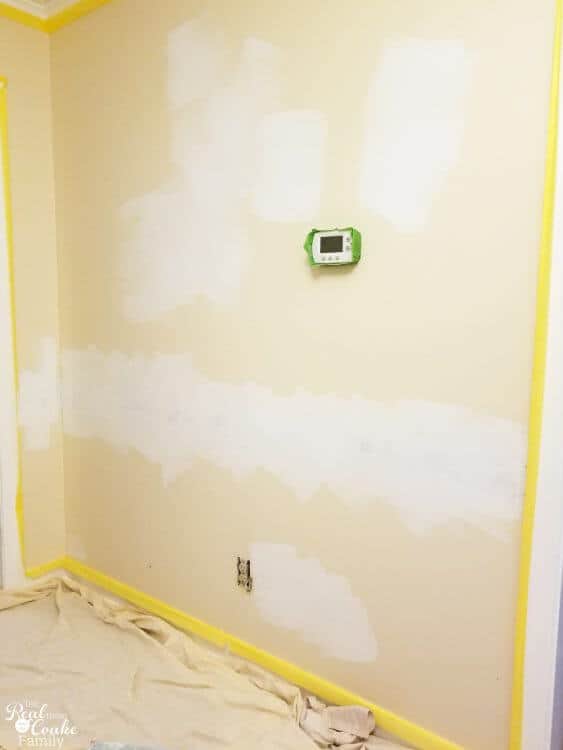
Do 2 coats. Yes, 2 coats. I know you don’t usually need to do multiple coats of primer, but in this case, we are just trying to match the texture that is already on the walls from the numerous coats of paint that have been added over the years. The primer is really only needed in the areas where the chair rail was because if it is like mine, it has never been primed and painted.
Save your thicker nap roller. You will need it in the next step.
I just washed mine out and saved it rather than buying 2.
Step 6: Paint the walls
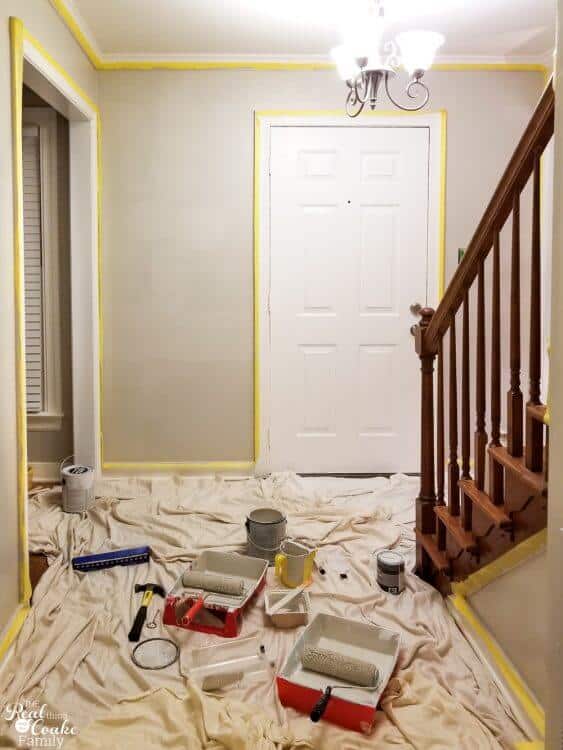
Now paint the walls as you normally would with your usual nap roller. You will want to work on one area or wall at a time.
Once you have painted the wall with the regular nap roller, while the paint is still wet, go over all of the areas that had chair rail and/or patch and paint with additional paint and the thicker nap roller. You can see that In the pictures above and below if you look for the slight distinction in the grey color on the wall. 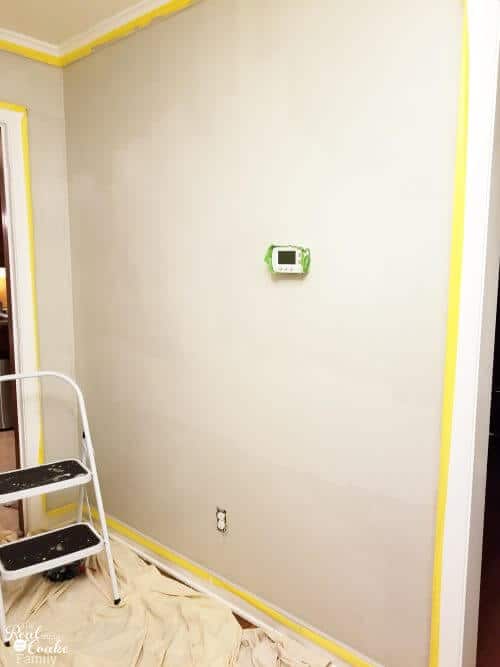
Paint 2 coats of paint using this method.
Step 7: Remove tape
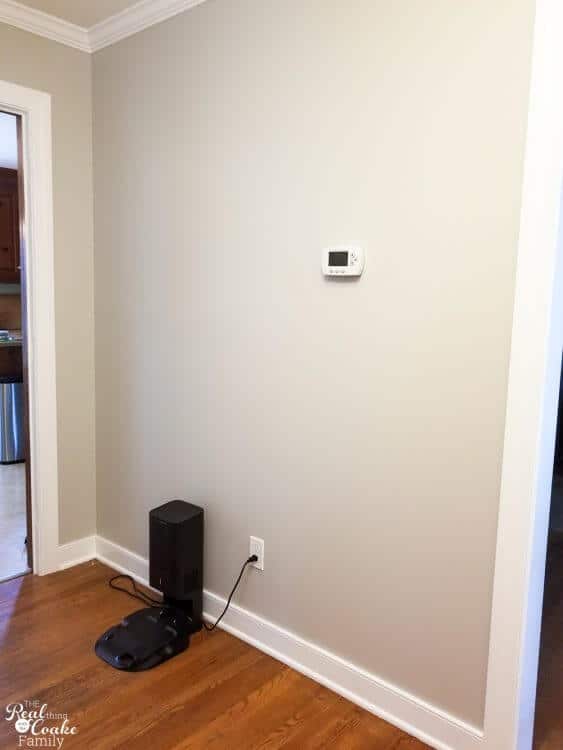
Remove your tape and enjoy your new chair rail free walls.
Now, I’m not going to lie and tell you I can’t see the chair rail at all or that this is a perfect solution. Let me show you a side by side comparison of the first attempt in our living room to this attempt.
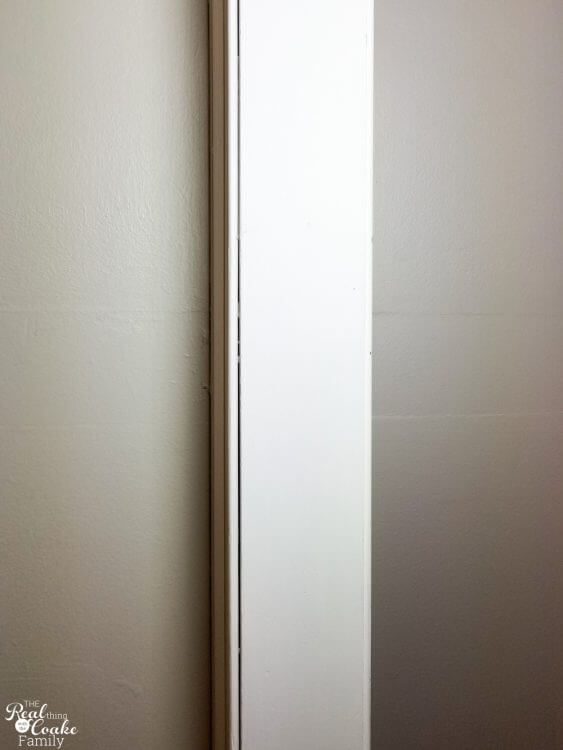
The new paint job I did in the hallway is on the left and the paint from the first time we took down chair rail is on the right.
You can still see that chair rail was there on the left, but it isn’t quite as prominent. Maybe I will find another method that is even better when I take down the chair rail in the kitchen, but for now, I’m calling this a success….or at least a much better method. ?
You can see a video of the process playing below or to the right on your screen.
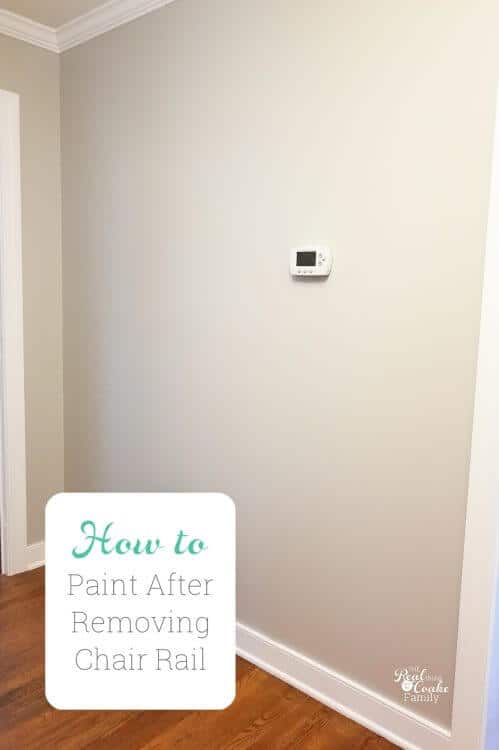
So while it may not be perfect, I think this worked pretty well and definitely better than anything else I’ve tried. It is better than any of the other options I know of, which are re-drywalling or skim coating the entire wall….uugh, No!
What tips do you have for painting the walls after removing chair rail? There is surprisingly little information about it on the web…so let’s chat and help each other out. Leave a comment below to help the conversation. ?

Hi what paint color did you use in this room.
It’s a color called – Repose Grey – I love it so much! I’ve now painted it in my office, bedroom and upstairs hallway. Hope that helps!